Choosing a logistics company in South Africa is one of the most consequential operating decisions a growing business makes. Get it right and you free up cash, capacity and management attention. Get it wrong and you spend the next two years apologising to customers, fixing invoices, and quietly looking for a way out of a contract.
This guide is for South African business owners, operations directors, and procurement leads who are evaluating their first serious logistics partner, or replacing one that isn't working. Written from the perspective of a logistics provider that has handled thousands of these conversations.
Get a NIGHTWING logistics quote →
What "Logistics Company" Actually Means in South Africa
The term "logistics company" covers a much wider range of services in South Africa than most buyers initially realise. At one end of the spectrum sits a single-service courier: collect a parcel, deliver a parcel. At the other end sits a fully integrated logistics partner running your entire supply chain, receiving stock from suppliers, holding it in warehouse, picking and packing customer orders, dispatching via courier or distribution, managing returns, and handling import/export documentation.
The right answer for your business depends on what you're trying to outsource and why. A courier-only relationship is fine for a business that already has its own warehouse and only needs the last-mile leg. A full contract logistics relationship makes sense for a business that wants to focus on what it actually does, make products, sell things, serve customers, and stop spending management time on supply chain operations.
The Six Service Tiers South African Businesses Buy
1. Courier (parcels and documents)
The simplest service. Overnight courier, same-day delivery, tracked. Good for any business shipping discrete parcels: e-commerce, B2B documentation, sample dispatch, regional sales reps. Pricing per parcel; no volume commitment usually required.
2. Distribution (palletised and bulk)
One step up. Distribution services handle bulk freight, palletised loads, and FMCG-style high-volume movement between warehouses, retailers and end customers. Different vehicle classes, different rate structures, different SLA expectations than parcel courier.
3. Warehousing (storage and inventory)
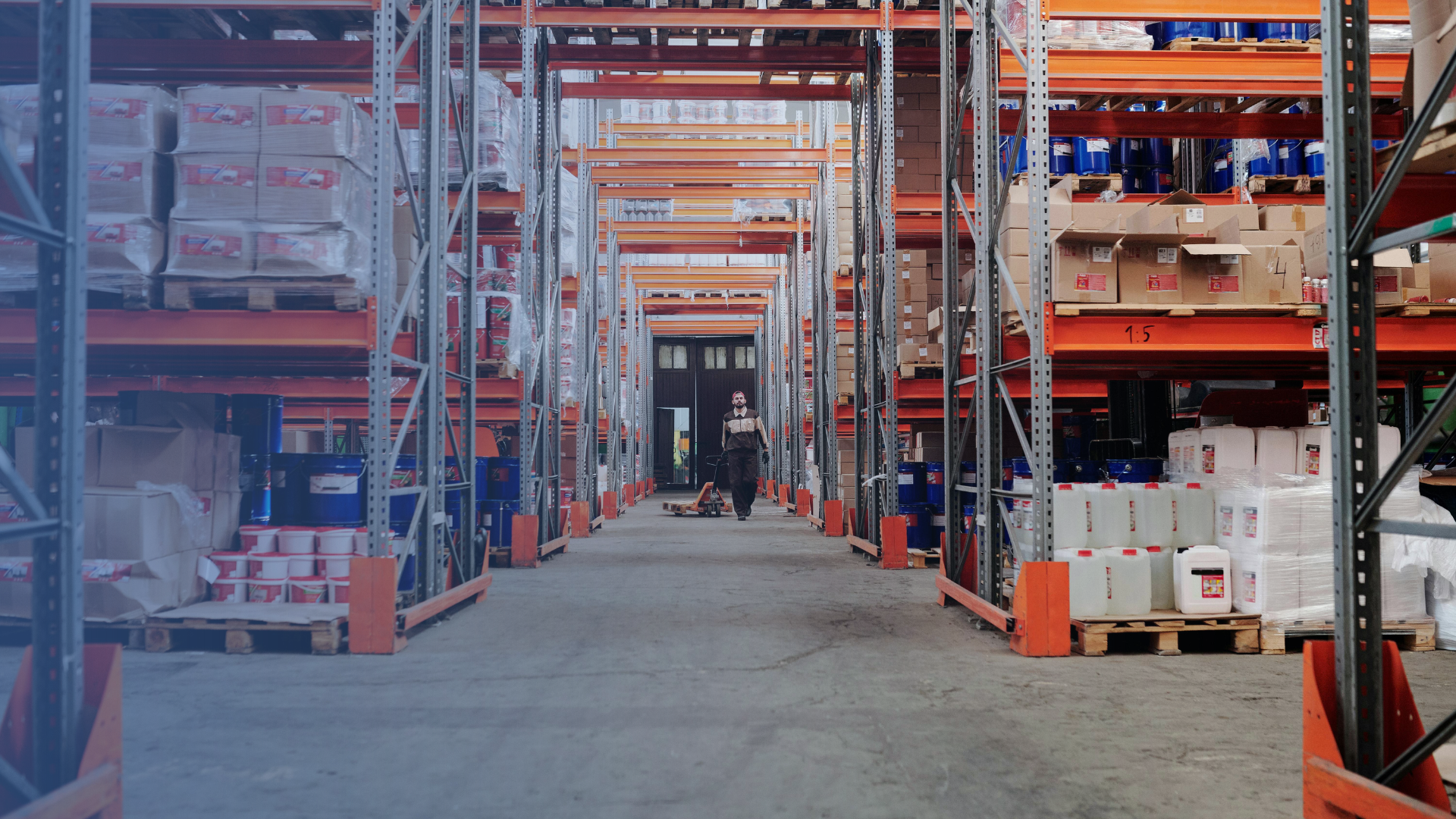
Outsourcing your warehouse to a logistics partner means handing over physical custody of stock. Warehousing services include receiving inbound shipments, putting stock away, inventory management, stock counts, and order picking. Storage is usually billed per pallet per week, with the picking and packing service layer charged monthly, plus inbound and outbound handling fees. A square-metre rate applies where you take dedicated floor space, and that rate is location-dependent. Municipal charges (rates, taxes and utilities) are billed over and above the rental.
4. Order fulfilment (pick, pack, ship)
For e-commerce and direct-to-consumer businesses, order fulfilment combines warehousing with the last-mile execution. The logistics partner receives orders from your e-commerce platform, picks and packs them, dispatches via courier, and handles returns. Pricing stacks the per-pallet-per-week storage, a monthly pick-and-pack service charge, and the courier leg on top.
5. Import / Export (cross-border + customs)
For businesses with international supply chains, import and export logistics handle freight forwarding, customs clearance, and cross-border distribution. This is specialist work, and mistakes are expensive and slow.
6. Contract logistics (fully outsourced supply chain)
The full bundle. Contract logistics is a long-term relationship where the logistics partner runs everything from inbound receiving to final-mile delivery, with named account management, custom SLA, and integrated reporting. This is the structure for businesses that have decided logistics is not their core competence and want to outsource it properly.
Compare a NIGHTWING logistics quote →
How to Choose the Right Logistics Company in South Africa
Match service breadth to your actual need
The biggest mistake South African businesses make is signing a contract for services they don't yet need, or not contracting for services they will need in 12 months. Map your current operations honestly, then map the operations you'll have in a year. Choose a logistics company that can handle both without you needing to switch suppliers.
Check the actual coverage footprint
Every logistics company in South Africa says "nationwide coverage". Ask for the operational definition. Where do they own their own depots? Where do they sub-contract? What's the next-day delivery footprint vs the two-day vs the three-day footprint? The marketing claim and the operational reality often diverge meaningfully.
Ask about technology and integration
Modern logistics is a technology business. Your logistics partner needs to integrate with your e-commerce platform, your accounting system, and ideally your customer-service tooling. Ask for the API documentation, ask for sample integration code, and ask which of your existing systems they've integrated before.
Get the SLA in writing
Service-level agreements separate professional logistics companies from amateur ones. The SLA should specify on-time-delivery percentage, claim-resolution turnaround, escalation path for service failures, and the commercial consequence when SLAs are missed. If the company resists putting numbers in writing, you've already learned what you needed to learn.
Check the team behind the account
Logistics is a relationship business. The named account manager is the person who fixes problems when the system fails. Ask to meet them before signing. Ask how many other accounts they handle. Ask what happens when they're on leave.
Pricing transparency
Insist on transparent pricing with all surcharges disclosed up front. The logistics company that quotes you a clean, line-itemed rate is showing you commercial discipline. The one that quotes a headline rate and tells you to figure out the rest is showing you something else.
What South African Logistics Outsourcing Actually Costs
Pricing varies enormously by service tier and volume. The bands below are indicative 2026 starting points between main centres (Johannesburg, Cape Town, Durban, Pretoria, Bloemfontein, East London, George and Port Elizabeth). They are base rates: the fuel levy, any surcharges, and VAT sit on top, and chargeable weight is the greater of actual weight and volumetric weight (length x width x height in cm, divided by the courier's divisor). The SA road-freight norm is around 4000, and some operators use 3000, which costs you more because a lower divisor means a higher chargeable weight, while NIGHTWING keeps a consistent, transparent 5000, so confirm the divisor when you compare quotes.
- Courier-only: from around R140 to R180 for the first 2kg overnight between main centres. Next-day metro-local parcels start lower, around R105 to R140; regional and outlying destinations and same-day metro work carry their own higher rates.
- Distribution: palletised loads are priced per load by lane, weight and volume rather than off a single published figure, because a Johannesburg-to-Cape Town pallet and a metro drop are not the same job.
- Warehousing: pallet storage is billed per pallet per week, in the region of R30 to R40 per pallet per week, plus inbound and outbound handling. Dedicated floor space is quoted on a location-dependent square-metre rate, with municipal charges over and above.
- Order fulfilment: the per-pallet-per-week storage above, plus a monthly pick-and-pack service charge in the region of R110 to R160, plus the courier leg per order.
- Contract logistics: Custom commercial structure based on volume and service mix; typically a base monthly fee plus per-unit handling
For any meaningful contract logistics relationship, expect a proper commercial conversation rather than a published rate card.
Read the Fuel Levy Before You Compare Quotes
Every courier and freight rate in South Africa carries a fuel levy on top of the base rate. It is expressed as a percentage of the base and reviewed monthly as the fuel price moves. Across the market it runs anywhere from about 18 percent at the low end to 50 to 70 percent at the high end. NIGHTWING sits at the low end, around 18 percent.
This matters more than most buyers expect, because the lowest base rate does not always produce the lowest invoice. Take a R150 base rate. At an 18 percent levy it lands at roughly R177 all-in. At a 60 percent levy that same R150 base lands at R240. The provider with the lower headline number can easily be the more expensive one once the levy is applied.
So when you evaluate a logistics company, ask two numbers, not one: the base rate and the fuel levy percentage. Then compare the all-in figure, not the base rate. A line-itemed quote that shows the levy openly is also a useful signal about how the rest of the relationship will be run.
Frequently Asked Questions
What is the difference between a courier company and a logistics company?
A courier handles parcels and documents. A logistics company in South Africa typically handles parcels plus some combination of warehousing, distribution, fulfilment, and import/export, depending on the provider. The bigger the bundle, the more it looks like a contract logistics relationship.
Should I use one logistics company for everything or split across providers?
For most growing South African businesses, consolidating with one provider beats splitting. The volume commitment unlocks better commercial terms, the relationship gives you leverage when something goes wrong, and one invoice beats four.
How long do logistics contracts typically run in South Africa?
Pure courier accounts are usually month-to-month. Distribution and warehousing contracts typically run 12 months. Full contract logistics relationships are usually 2-5 year arrangements with periodic price reviews.
What's the most common reason South African businesses change logistics providers?
Service failures during peak season, followed by hidden surcharges that didn't appear in the original quote, followed by account-management dropoff after the sale.
The Bottom Line
The right logistics company in South Africa for your business is the one that can grow with you, that puts SLAs in writing, that quotes transparently, and that has the team and the technology to handle your actual operations. Headline rate is the least informative thing in any quote you'll receive.
NIGHTWING has been doing this for nearly three decades. We handle overnight courier, distribution, warehousing, order fulfilment, import/export and full contract logistics for South African businesses ranging from e-commerce startups to corporate accounts.